
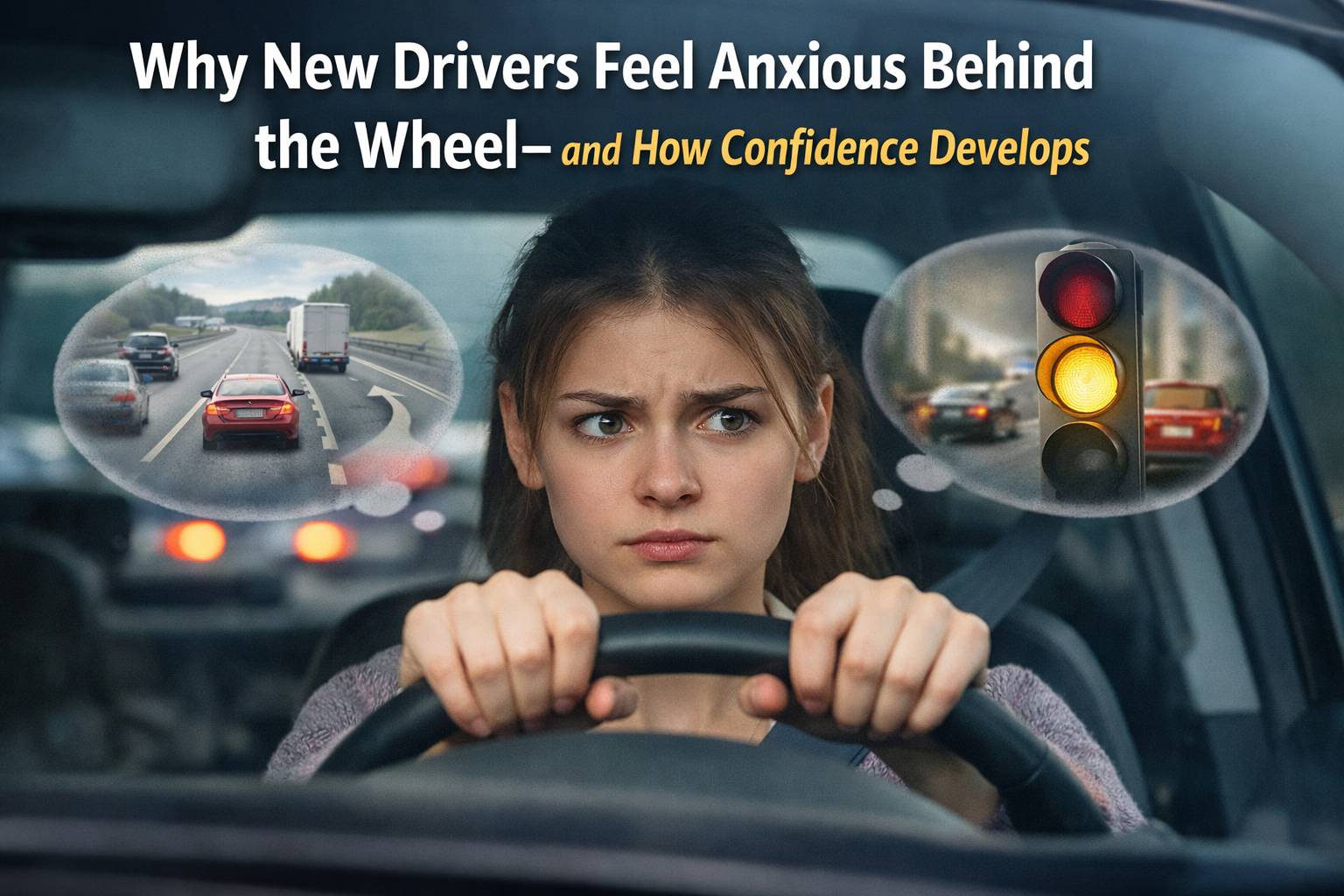
Why New Drivers Feel Anxious Behind the Wheel—and How Confidence Develops
The first time you sit in the driver’s seat alone, something shifts. The reassuring presence of an instructor or patient parent is gone. Every decision—when to brake, how to merge, whether it’s safe to turn—is yours alone. Cars feel closer, mistakes feel heavier, and even simple tasks can feel overwhelming.
For new drivers, anxiety isn’t unusual—it’s nearly universal. Understanding why this anxiety happens, and how confidence naturally develops over time, can make the transition from nervous beginner to capable driver far less intimidating.
The Roots of Driver Anxiety
Driving is one of the most complex everyday skills most people learn. It requires constant multitasking: monitoring mirrors, tracking traffic, maintaining speed, navigating routes, obeying road rules, and making split-second decisions—all while controlling a fast-moving vehicle.
Unlike many other skills, the consequences of mistakes feel serious. New drivers are acutely aware that errors can affect not just themselves, but passengers, pedestrians, and other motorists. This heightened sense of responsibility is important for safety, but it can also fuel anxiety.
Another major factor is cognitive overload. Experienced drivers rely on automation—the brain has learned to handle countless actions without conscious effort. New drivers, however, must actively think through every step. Should I change lanes now? Is that car slowing down? Am I braking too hard? This constant mental processing is exhausting and leaves little room for calm responses when something unexpected happens.
Social pressure adds yet another layer. Many new drivers worry about being judged by other road users—being honked at, rushed, or labelled as “inexperienced.” This fear of doing something wrong in public can intensify nervousness and actually make driving more difficult.
How Anxiety Shows Up Physically
Driver anxiety isn’t just mental—it’s physical. New drivers often grip the steering wheel tightly, hold their breath, tense their shoulders, or experience a racing heart and sweaty palms. Some even experience tunnel vision, where peripheral awareness narrows under stress.
These reactions come from the body’s fight-or-flight response. The brain interprets traffic as a constant source of potential danger and releases adrenaline. While this response is meant to protect us, it’s not ideal for calm, thoughtful decision-making. Learning to recognize and manage these physical reactions is an important step toward confidence.
How Driving Confidence Develops
Confidence behind the wheel isn’t something people either have or don’t have—it’s something that builds gradually through experience.
Automation Through Repetition
With time, the brain starts recognising patterns and automating responses. What once required intense focus—navigating intersections, maintaining lane position, judging gaps in traffic—slowly becomes second nature. As mental effort decreases, confidence grows naturally.
Accumulating Successful Experiences
Each uneventful drive becomes quite proof that you’re capable. Trips to the grocery store, successful merges, driving in light rain—all of these experiences stack up. Over time, anxiety loses its power because it’s outweighed by evidence that you can handle real-world driving.
Exposure to Different Conditions
Confidence strengthens when drivers gradually experience varied situations: busier roads, highways, night driving, and different weather conditions. Taking these steps progressively expands comfort zones without overwhelming the driver.
Developing Intuition
As experience grows, drivers begin to anticipate rather than react. They notice subtle cues—brake lights ahead, a car drifting lanes, a pedestrian hesitating at the curb. This intuitive awareness reduces surprises and creates a sense of control.
Accepting Imperfection
One of the biggest breakthroughs comes from realizing that mistakes are normal. Confident drivers aren’t perfect—they simply recover calmly. Missing a turn or braking late doesn’t define your ability; it’s part of learning. Letting go of perfection allows confidence to take root.
Practical Ways to Support Confidence
While time is the biggest factor, new drivers can actively support their progress. Practising in low-stress environments and setting small, achievable goals helps build momentum. Breathing deeply before driving and consciously relaxing the body can reduce physical tension.
Reflecting on what went well after each drive—rather than focusing only on mistakes—trains the brain to associate driving with competence instead of fear.
Confidence Develops on Its Own Timeline
There’s no universal schedule for confidence. Some drivers feel comfortable within months; others take longer. Factors like driving frequency, route complexity, and personal temperament all play a role.
What matters is steady progress. If anxiety slowly decreases and comfort increases over time, confidence is forming—even if it’s not immediately obvious.
The anxiety new drivers feel doesn’t disappear because roads become easier. It fades because the driver becomes more capable. And that transformation happens quietly, one mile at a time.
Conclusion
Feeling anxious behind the wheel is a normal part of learning to drive. That anxiety doesn’t mean you’re unprepared—it means you’re aware of the responsibility driving carries. With consistent practice and real-world experience, fear gradually gives way to familiarity, control, and confidence.
At Ultimate Drivers, this transformation is evident every day as new drivers transition from uncertainty to calm, informed decision-making behind the wheel. Confidence doesn’t come from being perfect; it comes from learning, adapting, and trusting your ability to handle the road. With time, patience, and the right guidance, every new driver can reach that point—one mile at a time.





0 Comments